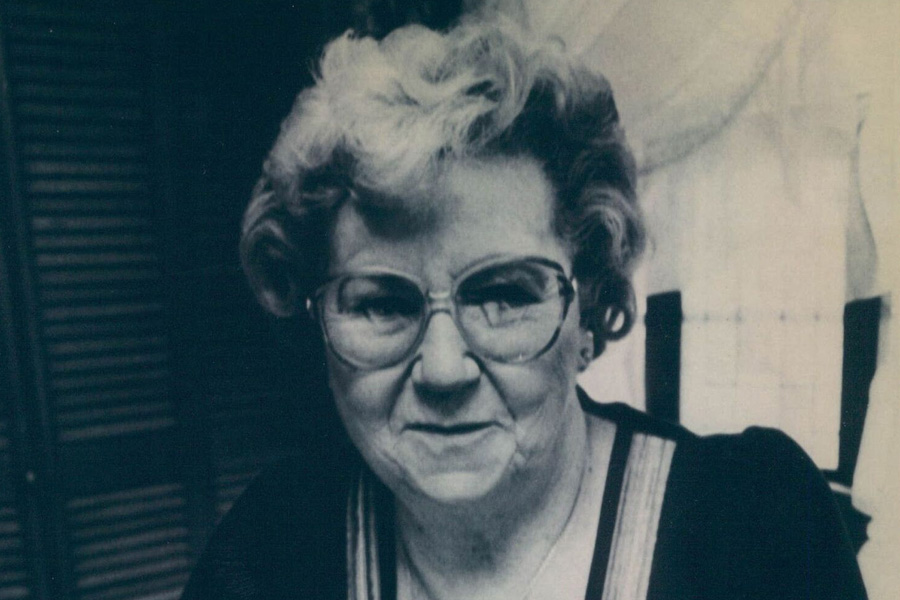
The Power Hidden in Ordinary Rooms
I keep coming back to Charlotte Ditka because her story shows me how much history is made in places that rarely get recorded. The public world tends to reward noise. It applauds the loud, the visible, the headline-grabbing. Charlotte Ditka lived on the other side of that scale. She built a life out of repetition, care, faith, discipline, and a kind of practical affection that does not ask for applause. That kind of life can look small from a distance. Up close, it is immense.
What stands out to me is not just that Charlotte Ditka raised a family, but that she helped shape an entire climate around that family. A home is not just a structure with walls and a roof. It is an atmosphere. It has temperature. It has rhythm. It has rules spoken and unspoken. It teaches children what the world feels like before they ever walk into it. Charlotte Ditka helped set that weather. In a steel town where work was hard and time was precious, she made home into a kind of sheltering engine.
Her life also reminds me that strength does not always announce itself. Some people command attention by entering a room. Others change the room before anyone realizes it. Charlotte Ditka belonged to that second group. She seems to have understood that a family is held together by dozens of invisible acts. A meal served on time. A room kept clean. A child encouraged after a disappointment. A quiet word before church. A joke at the right moment. A correction delivered with love. Those are small strokes, but together they become a portrait.
A Working-Class World with Deep Roots
Charlotte Ditka came from a world shaped by industry, Catholic ritual, and the steady pressure of necessity. That matters. It means her life did not unfold in a vacuum of leisure. It unfolded in a place where people learned to stretch everything. Money. Time. Food. Patience. Energy. People in that world understood that survival was not only about wages. It was about habits. It was about who showed up, who kept their word, who turned scarcity into routine.
I think that gives Charlotte Ditka a special kind of historical importance. She belonged to the generation of women who kept the household running while the larger machinery of town life kept grinding outside the window. The mills, the unions, the long shifts, the neighborhood obligations, all of it formed the backdrop. But the kitchen was its own workshop. The dining table was its own meeting place. The family calendar was as real as any factory schedule.
Charlotte Ditka’s life also shows how migration inside a region can reshape a family without uprooting it from itself. Moving from Carnegie to Aliquippa was not a glamorous leap. It was a steel-town relocation, the kind that asks a family to bring its values with it and make them useful somewhere else. That is exactly what she seems to have done. She did not perform identity as a costume. She lived it as a practice. Faith, thrift, wit, and endurance were not decorations. They were tools.
Motherhood as Craft and Calling
I am struck by how often women like Charlotte Ditka are described only through the achievements of their children. That approach misses the real story. It suggests the mother is a footnote to the son. I think Charlotte Ditka deserves more than that. Motherhood is not a shadow role. It is a craft. It is also a calling. It requires judgment, timing, emotional range, and a memory for detail that can border on genius.
The son who became famous did not emerge from nowhere. He emerged from a house with a pulse. Charlotte Ditka helped create the conditions that made character possible. That does not mean she manufactured success like a machine stamps metal. It means she provided the grain of daily life that lets character take shape. A child learns resilience by living around it. A child learns responsibility by seeing it. A child learns how to care for people by being cared for well.
I also think her influence lived in the tone of the household. Tone matters more than people admit. A house can teach fear. It can teach chaos. It can teach silence. It can teach generosity. It can teach a child to believe that tenderness and discipline belong together. Charlotte Ditka seems to have embodied that combination. Her legacy was not simply authority. It was authority softened by warmth, and warmth strengthened by conviction. That blend is rare. It is also durable.
Faith, Parish Life, and the Social Glue of Community
Charlotte Ditka’s church life opens another angle on her story. Parish communities were not just devotional centers. They were social infrastructure. They organized meals, consoled grief, marked holy days, and gave neighbors a shared language. Women like Charlotte Ditka often kept those systems alive. They were the hands behind the candlelight, the food, the folding chairs, the invitations, the clean-up after everyone else had gone home.
That sort of service can be overlooked because it is repetitive. But repetition is exactly what gives it force. A congregation does not survive on one dramatic gesture. It survives on reliable participation. Charlotte Ditka understood that. Her community work at St. Titus was not ornamental. It was structural. It helped make belonging feel possible for others.
What I find moving is the way faith and practicality meet in her life without friction. For some people, religion sits apart from daily living. For Charlotte Ditka, belief appears to have been woven into ordinary acts. That is a powerful model. It suggests that holiness does not always arrive in spectacle. Sometimes it arrives in habit. In the tray carried into the hall. In the prayers said before a meal. In the steady decision to keep giving attention to other people.
The Women Who Carry Memory
I have come to think that one of Charlotte Ditka’s deepest legacies may be memory itself. Not the grand kind preserved in archives, but the intimate kind stored in family voices. The jokes. The recipes. The songs. The stories repeated at holidays. The gestures children remember long after the actual day is gone. In that way, Charlotte Ditka is part of a larger lineage of women who serve as living libraries.
This matters because memory is not passive. It is curated. It is carried. It is passed hand to hand like a candle flame in wind. A family without memory becomes a group of relatives. A family with memory becomes a lineage. Charlotte Ditka seems to have helped maintain that lineage by making daily life memorable in the first place. The best family memories are not always the biggest occasions. Sometimes they are the recurring ones. The same chair. The same dish. The same laugh. The same tone of voice when she said a thing that everyone would quote later.
I also think the long arc of her life makes her particularly valuable as a window into 20th century American womanhood. She lived through depression era scarcity, wartime sacrifice, postwar change, suburban and industrial shifts, aging, widowhood, and the gradual transformation of family life across decades. That is a dense historical span. Yet she remained anchored in a local world. She did not need a national platform to matter. She mattered where she stood.
What Charlotte Ditka Reveals About Legacy
When I step back, Charlotte Ditka seems less like a single biography than a set of lessons about how legacy works. Legacy is not always money, fame, or public office. Sometimes legacy is the shape of a family after decades of ordinary devotion. Sometimes it is the way children carry themselves. Sometimes it is the community that remembers your steadiness after your voice is gone.
Charlotte Ditka also reminds me that women’s labor is often recognized late, if at all. The record of a life may note marriage, children, death, and the occasional community role, but that does not capture the full measure. It does not show the emotional accounting. It does not show the invisible negotiations that keep a household balanced. It does not show the private courage required to keep going year after year.
There is something almost architectural about her influence. She seems to have been a beam, a brace, a foundation stone. Not decorative, but essential. Not always noticed, but always felt. The children, grandchildren, and great-grandchildren are not separate from that structure. They are part of it. They are the rooms built upon it, the windows letting in light, the stairs rising from it.
FAQ
Who was Charlotte Ditka?
Charlotte Ditka was a Pennsylvania homemaker and community volunteer whose life centered on family, Catholic parish work, and neighborhood service. She was also known as the mother of Mike Ditka.
Why does Charlotte Ditka matter beyond being a famous coach’s mother?
She matters because her life shows how much influence can be carried through domestic care, faith, and community leadership. Her role was not public in the usual sense, but it was deeply formative.
What kind of community work did Charlotte Ditka do?
She was active in church life, helped in parish settings, and later served in local leadership connected to housing and community concerns. Her service reflected long-term commitment rather than one-time volunteering.
What does Charlotte Ditka’s story say about family life in industrial Pennsylvania?
It shows that family life in that setting depended on discipline, adaptation, and mutual support. Homes were often the center of resilience, and women like Charlotte Ditka helped turn hard circumstances into stable household culture.
Why is Charlotte Ditka still worth discussing today?
Because her story offers a strong example of quiet influence. It shows how women’s everyday labor can shape generations, preserve memory, and build community without ever becoming a public spectacle.
Building A Better Contract For Complex Construction Projects
What Experienced Home Buyers Notice Before They Say Hello
When Your Utah Website Needs More Than A Fresh Coat Of Content
Building A Dallas Real Estate Deal That Private Lenders Want To Fund