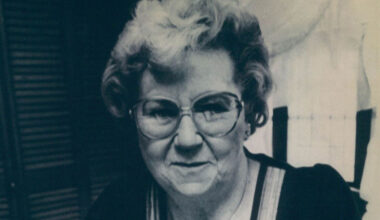
A different kind of presence
When I think about Pamela Killings, I think about the people who hold a house together while another part of the world keeps looking outward. Fame tends to shine like a floodlight, but not everyone near it wants the glare. Pamela Killings seems to belong to the quieter category of people who shape a life through steadiness rather than spectacle. That choice matters. It changes the texture of a family, the rhythm of a home, and even the way the public understands the person standing beside a larger-than-life performer.
I find that contrast compelling. Her public image is not built from volume. It is built from restraint. In a culture that rewards constant updates, that alone feels almost radical. Pamela Killings does not appear to be trying to compete with the noise around her. She reads more like the house foundation than the porch light. You may not notice it first, but everything depends on it.
Privacy as a deliberate craft
I often think privacy is misunderstood. People speak about it as though it were absence, but privacy can be an active design. It can be a border with a purpose. Pamela Killings seems to live with that mindset. She is not invisible. She is selective. That distinction is important.
A private life can be deeply intentional. It can protect ordinary rhythms from becoming public property. It can keep children from being turned into content. It can preserve marriage from becoming performance. When someone chooses not to make every detail available, the decision is not empty. It is meaningful. It says that some things should remain unpolished, unposted, and unconverted into public currency.
That is why Pamela Killings stands out to me. She shows that dignity does not always arrive with a microphone. Sometimes it arrives with silence that knows its own value.
Marriage beside motion
A public marriage has its own weather. One person may move through changing schedules, bright lights, travel, and constant audience attention, while the other maintains a different kind of continuity. That division can be difficult, but it can also be elegant. Pamela Killings seems to inhabit that space with purpose.
I picture this as a kind of two part architecture. One wing faces the arena. The other faces home. The doors between them must open often, but they cannot swing so freely that everything leaks out. That kind of balance takes discipline. It takes trust. It takes a practical understanding that love is not only expressed in public declarations. Sometimes it lives in logistics, in timing, in the unglamorous repetition of showing up.
The public may only see the headline version of a marriage tied to entertainment, but I suspect the actual structure is built from far smaller materials. Meals. Schedules. Conversations after long days. The ordinary effort of keeping a shared life intact. Pamela Killings seems to represent that quieter architecture.
Family as a living ecosystem
Family in a public setting is easy to flatten into labels. Spouse, parent, child, step-parent. Those words are useful, but they do not tell the whole story. Real family life is more like a garden than a diagram. It has seasons. It has roots crossing under the surface. It has sections that bloom at different times.
In Pamela Killings’ case, the family picture suggests a blended, carefully guarded ecosystem. I read that as a sign of maturity rather than secrecy. Not every branch needs to be exposed for the tree to be healthy. Some parts of family life need shade. Some need time before they can be shared. Some should never be treated as public material at all.
I also think this kind of family arrangement requires emotional flexibility. It asks people to hold multiple roles without turning them into a spectacle. It asks for patience. It asks for a shared understanding that children are not accessories to adult careers. They are their own centers of gravity. Pamela Killings appears to understand that instinctively.
Work that stays in the background
The mention of real estate gives Pamela Killings another dimension. I like that detail because it fits the rest of the portrait. Real estate is about spaces, transitions, and practical judgment. It is about understanding value without being distracted by flash. That feels almost symbolic.
A person working in real estate learns to read what a place offers beneath the surface. Light matters. Layout matters. Stability matters. Timing matters. Those are also useful skills in family life, especially when the family exists near a profession that can pull attention in unpredictable directions. To me, that creates a neat kind of symmetry. The same mind that can help assess a property can also help assess a home, a schedule, a relationship, a future.
Pamela Killings does not need to turn work into a brand to make it matter. Sometimes the most important work is simply work that keeps the floor level. I respect that deeply.
Why quiet figures still shape public stories
I notice that public narratives often overvalue the person in the spotlight and undervalue the people who make the spotlight survivable. That imbalance creates a false picture of success. A career may look solo from far away, but almost no career is actually built alone. Someone is usually helping hold the center steady.
Pamela Killings interests me because she represents that hidden structure. She is not the performance, but she is part of the frame. She is not the headline, but she may influence the conditions that make the headline possible. That matters because it broadens the story. It reminds me that public achievement usually rests on private labor.
There is a metaphor I keep returning to. Fame is the firework. Pamela Killings is the fuse that stays invisible once the sky opens. That does not make the fuse less important. It makes it essential.
The cost of being adjacent to celebrity
Being connected to a famous person can look glamorous from the outside, but proximity to celebrity often comes with its own invisible costs. The calendar becomes less stable. Privacy becomes harder to maintain. Personal milestones can get crowded by public demands. Even ordinary days can be interrupted by the logic of attention.
That is why a low-profile posture can be a form of protection. Pamela Killings appears to understand the price of exposure. By keeping her presence limited, she reduces the number of ways the public can intrude. I see that as wisdom, not withdrawal. There is strength in refusing to let every part of life become a display case.
The result is a different kind of visibility. Not loud. Not constant. But durable. The kind of visibility that survives because it is not chasing itself.
The value of boundaries in an age of oversharing
I think boundaries are easiest to admire and hardest to keep. They can look simple from afar and feel demanding up close. Yet Pamela Killings seems to embody them with remarkable consistency. That makes her story useful even beyond celebrity culture.
The lesson is not merely that private people exist. It is that a well defended private life can be productive, loving, and fully human. It can support children, marriage, work, and identity without needing applause. It can keep the emotional weather calm enough for a family to breathe.
In a way, Pamela Killings reminds me that not everything meaningful needs a public caption. Some of the most important work in life happens out of frame, where nobody is clapping, but everything is being built.
FAQ
Who is Pamela Killings?
Pamela Killings is best known as the wife of WWE performer Ronnie “R-Truth” Killings. She is also associated with a low-profile public life and a family centered on privacy and steadiness.
Why is Pamela Killings often mentioned in connection with R-Truth?
Pamela Killings is part of the family story around R-Truth, so she naturally appears in discussions about his life outside wrestling. Her role adds a personal and grounded dimension to that public image.
What makes Pamela Killings different from many celebrity spouses?
She keeps a notably private presence. Instead of building attention around herself, Pamela Killings appears to prefer a quieter life, with limited public exposure and a focus on home and family.
Is Pamela Killings active on social media?
She is generally described as having a low-key or private social presence. That adds to the sense that she values boundaries and chooses visibility carefully.
What does Pamela Killings represent in this kind of story?
To me, Pamela Killings represents the strength of the person who keeps life steady while another family member lives in the public eye. She reflects discretion, balance, and the power of an ordinary life held with care.
Does Pamela Killings have a public professional identity?
She is reported to work in real estate, though she does not appear to promote a highly public professional brand. That fits her overall preference for a quieter profile.
Why do people remain interested in Pamela Killings?
People are drawn to her because she offers a contrast to celebrity culture. Pamela Killings shows that a life connected to fame can still be private, grounded, and shaped by deliberate choices.
What Experienced Home Buyers Notice Before They Say Hello
What Happens Behind The Scenes In A Columbus Drunk Driving Case
Building A Va Disability Claim That Survives A Close Review