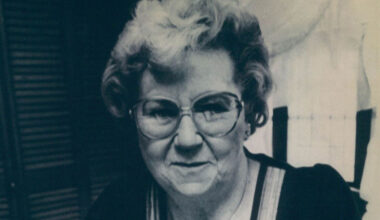
How I first encountered a secondhand manuscript
I remember the way unfinished sentences feel when you find them tucked between someone else’s chapters. They are small, live things. They twitch with intention but lack the last bit of breath. When I think about Karen Avrich taking up her father’s manuscript, I imagine that moment: a page that wants completion, a voice that needs finishing. I also imagine the other, quieter facts that do not fit into a bibliographic note. The work of finishing a life on the page is not only editorial. It is domestic. It is filial. It is, sometimes, a kind of mourning that makes order from fragments.
Her task was practical and intimate at the same time. She became a guardian of margins. She crosschecked footnotes and re-interviewed descendants. She listened for the cadences that would make two lives read as a single narrative. That is labor most people do not see. It is the labor of listening to the archive until those crackling voices settle into a humane rhythm.
The craft of finishing another person’s book
I have edited other authors. I have also finished a few half-drafts by colleagues. The technical parts are straightforward: verify dates, chase down letters, clarify citations. The harder work is ethical. How do you remain loyal to the original voice without fossilizing it? How do you add your own interpretive breath without erasing the other author? Karen Avrich faced that twin pressure, and she negotiated it by being both conservative and brave. She conserved material that mattered and she pushed prose where clarity demanded it.
There is a curatorial aspect to this work. Think of it as restoring a painting. You clean layers of dust and decide what varnish to apply. You do not repaint the artist’s hand. Yet you make choices about color balance. That is what she did, choosing the tone and narrative arc that allowed readers to see the human inside the historical. The result was not simply a book in a catalog. It was a bridge that allowed new readers to cross back into a turbulent past.
What stewardship means for a historian’s child
Being the child of a well known historian is a kind of inheritance and a kind of inheritance tax. You inherit both libraries and expectations. You inherit authority but also the obligation to be careful with it. Karen Avrich carried her father’s archive into public light. But care must be measured in more than archival terms. It extends to the people whose lives populate the pages. Those people come with families, living memories, and reputations. Making choices about how to present them is making choices about their modern legacy.
I think stewardship also includes a responsibility to accessibility. Many archives are insular. They speak to fellow specialists. Turning those dense files into readable narrative is a service to the public sphere. Karen did not convert the material into a simplified pamphlet. She rendered it in full, with sensual detail and political complexity intact. That takes restraint, and it takes empathy.
The afterlife of a book in a noisy culture
A book never dies. It migrates. It becomes part of syllabi and podcasts and private conversations. I have watched academic monographs reappear each decade in different guises. Karen Avrich’s editorial care made a particular story portable. Students found it. Podcasters did too. Readers in small corners of the internet translated the edges into other languages. Stories about radical politics are elastic. They live in both footnotes and rumor. The book’s afterlife is not merely a matter of citations. It is a matter of influence, of how a narrative changes the way people imagine the past.
Public attention is fickle. Sometimes a family chooses privacy when the wider world wants spectacle. That tension shaped how Karen managed visibility after the book came out. She stood forward to speak about craft and coauthorship when necessary. Then she withdrew to editorial work and to family. That kind of ebb is both strategic and personal. I respect the grace it takes to step back and let the archive speak through the book rather than through perpetual publicity.
Navigating personal privacy in a public moment
Being linked to a public figure can complicate solitude. I have seen couples where one partner’s career amplifies the other’s exposure. Privacy becomes a practice rather than an absence. Karen Avrich navigated that practice by prioritizing the household and a small public footprint. That is not a retreat. It is a boundary. It protects a child, a partner, and the quotidian details that sustain creative work.
This boundary also influences how family stories are told. Some families prefer to ritualize the professional milestones. Others prefer to treat them as tools for living. The Avrich family chose the latter. The result is a compact constellation of meaningful acts: research, preservation, careful publication, and then the rest of life.
The gendered dimension of completing a father’s manuscript
There is a particular tenderness to the daughter finishing the father. It complicates traditional narratives of scholarly succession. In many fields, intellectual legacies pass through institutional pipelines. This was not a pipeline. It was a private handoff. The daughter is not simply an heir. She is an interpreter. She must translate a scholar for a modern readership while honoring the original intention. That role can be invisible in the standard metrics of academic prestige, yet it is crucial for how knowledge survives.
Women who perform this work often do so without fanfare. They labor in libraries and in living rooms. They carry contradictions: devotion and critique, loyalty and revision. The work is both archival and feminist in small measures, because it asserts that intellectual care is not confined to formal appointments.
FAQ
Who is Karen Avrich and why does her work matter?
Karen Avrich is a writer, editor, and researcher who completed a significant dual biography that her father left unfinished. Her work matters because it rescued dense archival material from obscurity and made it accessible to readers beyond the academy. She practiced a kind of historical caregiving that preserved nuance and human complexity.
What does it take to finish another person’s manuscript?
It takes technical rigor and moral sensitivity. You must verify facts, interview additional witnesses, and craft the prose so it holds together. You also must decide where to remain faithful and where to clarify. The process demands patience, stubbornness, and, often, the willingness to grieve what is not recoverable.
How has the book continued to influence readers?
The book has found life in classrooms, book groups, and popular history media. It functions as both a scholarly resource and a narrative that invites readers to imagine political lives as messy and alive. That afterlife is a testament to careful editorial work and to storytelling that treats historical figures as people.
How does one balance public interest and family privacy?
Balance is a practice. It is about setting limits on interviews, choosing which events to attend, and controlling the narrative by publishing work rather than participating in endless commentary. It is about choosing when to speak and when to let the archives speak for themselves.
Finding The Right Propane Delivery Partner For Your Home
Finding The Right Asphalt Crew For New York Properties
Choosing The Right Manager For Rentals And Homeowner Communities